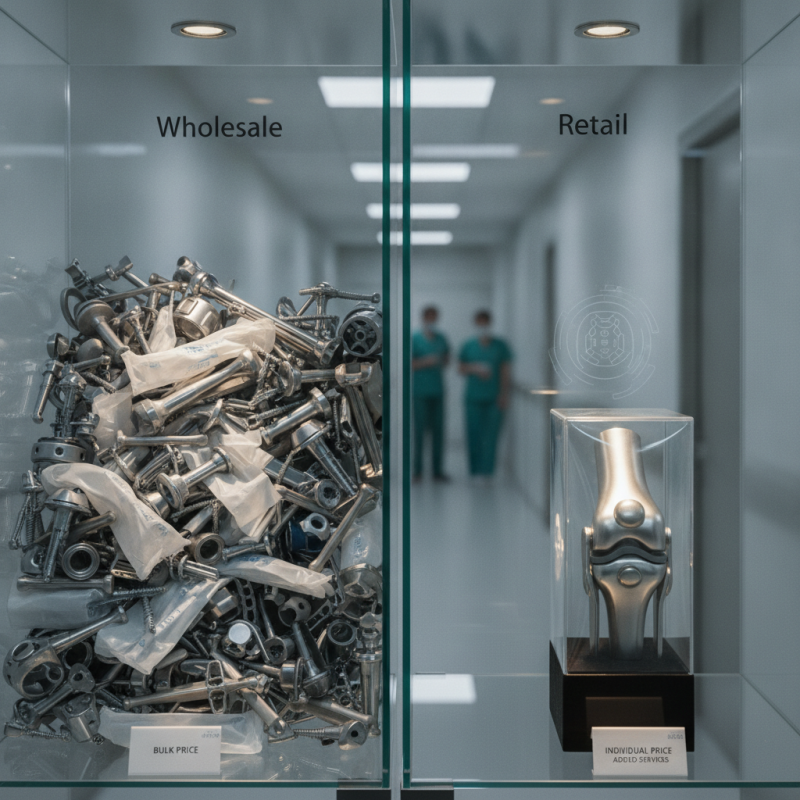
In the healthcare industry, understanding costs is crucial. One significant question arises: "What is the cost difference between wholesale and retail orthopedic implants?" This discrepancy can greatly impact hospitals, clinics, and patients. Wholesale orthopedic implants are typically procured in bulk, leading to lower prices. Retail prices, in contrast, can be substantially higher due to added services and markups.
Many healthcare providers face budget constraints. They often seek to minimize expenses while ensuring quality care. Yet, the path to cost savings isn't always straightforward. Some practitioners may overlook the importance of negotiating prices with suppliers or understanding the market dynamics. As a result, they might miss out on significant savings that could benefit their patients.
The nuances in pricing structures call for careful consideration. Factors like manufacturer reputation, implant technology, and post-purchase service can influence costs. It’s essential to weigh these elements against budget limitations. This landscape poses questions not just about price, but also about quality and reliability. Making informed choices is vital for effective healthcare delivery.
Overview of Orthopedic Implants and Their Market
Orthopedic implants are essential in medical procedures. They help repair and support damaged bones and joints. The market for these implants is vast, with numerous options available. Surgeons rely on implants to enhance patient outcomes. However, the choice of implants can be influenced by cost.
The orthopedic implant market is complex. It encompasses various materials, designs, and technologies. Demand is high, particularly in aging populations. New advancements are frequent, yet challenges exist. Some facilities may struggle with the latest innovations. Others may find it hard to balance quality and cost. Different regions experience varied implant availability. This affects surgeons' ability to provide the best care.
Cost discrepancies between wholesale and retail prices are significant. Wholesale prices tend to be lower, benefiting healthcare facilities purchasing in bulk. Retail prices can be inflated due to added distribution costs and markups. However, not all facilities have access to wholesale purchasing. This creates a dilemma for smaller practices. They may face increased costs, impacting patient care decisions. As the market evolves, addressing these disparities is crucial for equitable healthcare access.
Understanding Wholesale Pricing for Orthopedic Implants
Wholesale pricing for orthopedic implants offers significant cost savings compared to retail prices. Understanding how these prices are structured is essential for healthcare professionals and facilities. Wholesale prices reflect the direct costs incurred by manufacturers. These costs include materials, production, logistics, and sometimes, volume discounts.
When purchasing in bulk, hospitals and clinics benefit from lower prices. However, not all suppliers are equal. Some may have hidden fees or inconsistent quality. It's crucial to vet suppliers thoroughly. Ensure that they are reputable and understand their return policies.
Tip: Always compare a few suppliers. Prices can vary widely, even for the same implants.
Another factor to consider is the contract agreements. Some wholesale suppliers require long-term commitments that could affect future purchasing flexibility. This aspect can lead to overspending if not analyzed well.
Tip: Reassess contracts frequently. Market conditions change, and better deals might arise unexpectedly.
By comprehensively understanding wholesale pricing, healthcare facilities can ensure they are not overpaying for essential orthopedic implants while maintaining high standards of care.
Retail Pricing: Factors Affecting Cost of Orthopedic Implants
The retail pricing of orthopedic implants varies significantly due to several influencing factors. One crucial factor is the cost of materials. Implants are often made from high-quality metals and polymers, which can be expensive. Reports indicate that material costs can account for up to 40% of the retail price of implants. Moreover, advanced technologies used in manufacturing these products, like 3D printing, add to the costs. These technologies improve the fit and performance of implants but raise the overall price.
Another important aspect is the distribution and logistics involved in bringing these implants to hospitals and surgical centers. Distribution networks require a robust infrastructure, which adds to operational costs. A survey from the Orthopedic Implant Industry Association revealed that logistics contribute approximately 10-15% of the final retail price. The need for timely delivery and storage impacts the overall cost structure.
Lastly, surgeon expertise and hospital affiliation also affect prices. Implants used in prestigious hospitals might carry a premium due to the facility's reputation and the surgeon’s experience. Reports suggest that even within similar implant categories, pricing can vary up to 30% based solely on the provider. This variability prompts a need for transparency and further examination of pricing strategies in the orthopedic implant market.
Cost Difference Between Wholesale and Retail Orthopedic Implants
| Implant Type |
Wholesale Price (USD) |
Retail Price (USD) |
Price Difference (USD) |
Factors Affecting Cost |
| Knee Implant |
$1,500 |
$2,500 |
$1,000 |
Material Quality, Distribution Costs |
| Hip Implant |
$1,800 |
$3,200 |
$1,400 |
Research & Development, Regulatory Costs |
| Spinal Implant |
$2,000 |
$4,000 |
$2,000 |
Surgical Techniques, Hospital Fees |
| Shoulder Implant |
$1,700 |
$3,000 |
$1,300 |
Market Demand, Manufacturing Processes |
Comparative Analysis: Wholesale vs. Retail Implant Prices
The cost difference between wholesale and retail orthopedic implants can be significant. Research shows that retail prices for orthopedic implants can be 30-50% higher than wholesale rates. This disparity often stems from added overhead costs in retail operations. Hospitals and clinics that purchase implants directly from manufacturers usually benefit from the lower wholesale prices. They circumvent the markups associated with third-party distributors.
A 2022 report from the Orthopedic Implant Market Analysis indicated that hospitals that leverage bulk purchasing can save approximately $2.5 million annually. This finding underscores the importance of understanding pricing structures. However, not all facilities can negotiate favorable terms with suppliers. Many smaller practices may rely on retail purchases, ultimately affecting their operational costs.
An analysis of implant pricing reveals inconsistencies in the market. Some regions report significant variances, with the same implant costing up to 70% more in retail settings. This raises questions about transparency in pricing and access to affordable care. Understanding these dynamics is crucial for healthcare professionals and administrators aiming to navigate the orthopedic implant supply chain effectively.
Implications of Price Differences for Healthcare Providers and Patients
The cost difference between wholesale and retail orthopedic implants is significant and has major implications for healthcare providers and patients alike. Research indicates that wholesale prices can be up to 40% lower than retail prices in some cases. This discrepancy can strain hospital budgets, making it challenging for healthcare providers to deliver affordable care.
Healthcare providers often face pressure to keep costs down. A study from the American Academy of Orthopaedic Surgeons (AAOS) noted that hospitals could save millions annually by negotiating better prices. However, there's a risk involved. Price differences might tempt some providers to choose lower-cost implants that could compromise quality.
Patients also feel the impact of these costs. When hospitals pay more for implants, these expenses often translate into higher out-of-pocket costs for patients. Data from Health Affairs reveals that patients can sometimes face bills exceeding $10,000 for orthopedic surgeries. This financial burden can lead to difficult decisions about necessary procedures. Providers must weigh these price differences to uphold patient care quality while managing costs effectively.
Conclusion
The article explores the cost difference between wholesale and retail orthopedic implants, highlighting key aspects of the orthopedic implant market. It begins with an overview of the market, emphasizing the increasing demand for these medical devices. Understanding the wholesale pricing structure reveals bulk purchasing advantages for hospitals and medical facilities, which can significantly reduce overall costs.
In contrast, retail pricing is subject to various factors, including distribution costs, markups, and healthcare provider negotiations. A comparative analysis illustrates the stark price disparities between wholesale and retail implant costs, a difference that has substantial implications for both healthcare providers and patients. Ultimately, addressing the question, "What is the cost difference between wholesale and retail orthopedic implants?" underscores the importance of pricing strategies in enhancing access to necessary medical treatments.
 Grai Orthopedic Implants
