Choosing among China’s top orthopedic implant suppliers requires more than comparing prices, product photographs, or polished websites. Reliability begins with evidence. Buyers should examine ISO 13485 certification, product registrations, clinical documentation, sterilization validation, and batch traceability. A trustworthy supplier can explain each step clearly.
This guide explores “How to evaluate the reliability of orthopedic implants suppliers online” through a practical, evidence-based lens. Dr. William H. Maisel, a former FDA medical device safety leader, has emphasized that medical devices must be “safe and effective.” That principle should guide every online assessment, especially when reviewing Chinese manufacturers for plates, screws, spinal systems, or joint replacements.
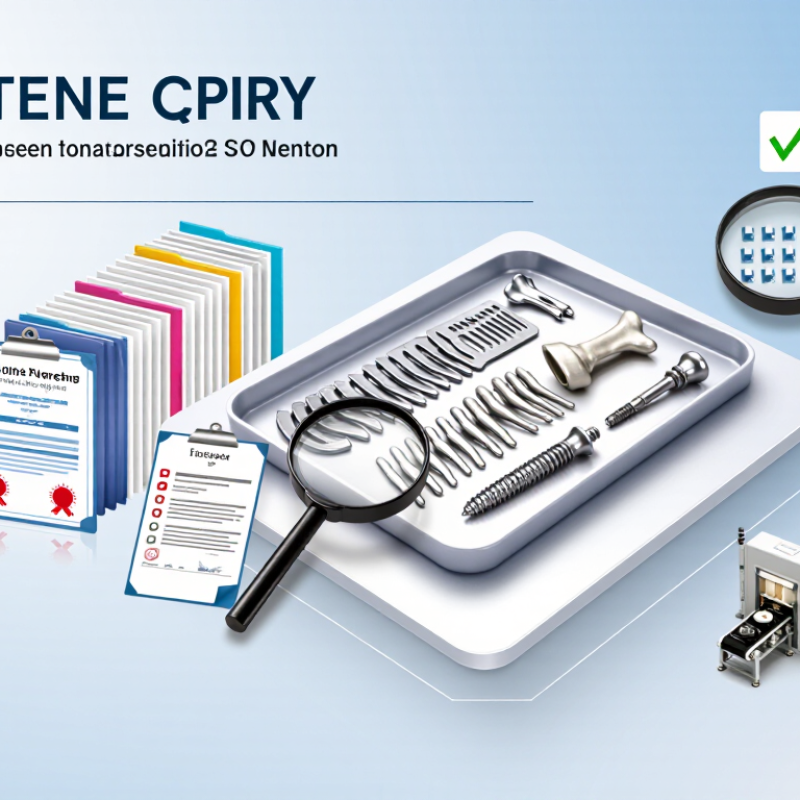
Look for visible certificate numbers, issuing bodies, validity dates, and matching legal company names. Then verify those details through official regulatory databases. Request technical files, material specifications, packaging records, and sterilization reports. Do not rely on screenshots alone. Small details matter.
Supplier history also deserves close attention. Examine recall records, complaint handling, export markets, audit results, and independent customer references. A factory tour, whether physical or virtual, may reveal cleanroom discipline, inspection equipment, and staff training. Still, online evidence has limits. I have learned that an attractive website can hide weak documentation. That possibility should not be ignored.
The strongest supplier is not necessarily the largest or cheapest. It is the company that answers difficult questions consistently, provides verifiable records, and accepts reasonable quality audits. Careful evaluation protects patients, clinicians, distributors, and long-term business relationships.
Definition and Scope of China’s Orthopedic Implant Supplier Market
How to Evaluate China Top 10 Orthopedic Implant Suppliers?
China’s orthopedic implant supplier market covers manufacturers, authorized distributors, and specialized service providers. Its products mainly include joint replacements, trauma fixation, spinal systems, and sports medicine implants. Dental implants and general surgical instruments usually require separate market definitions. The boundary is not perfectly clean.
According to the National Bureau of Statistics, people aged 60 and above reached 296.97 million in 2023, or 21.1% of China’s population. This demographic shift supports long-term demand for joint and spinal procedures. Frost & Sullivan estimated China’s orthopedic implant market at approximately RMB 30 billion in 2022, although estimates differ by product scope and channel coverage. That matters.
A credible supplier evaluation should examine NMPA registration status, manufacturing capacity, clinical evidence, complaint handling, and post-market traceability. China’s medical device regulations classify most orthopedic implants as high-risk devices, requiring strict registration and quality controls. Procurement performance also deserves attention. The National Healthcare Security Administration’s artificial joint procurement data can reveal pricing pressure and hospital access, but it does not measure complete commercial strength. A top-ten list based only on revenue may mislead. Regional distribution, revision support, surgeon training, and supply continuity often matter more during a real operation. Some public data remains incomplete, so supplier rankings should be treated as working assessments, not final truth.
How to Evaluate China’s Top 10 Orthopedic Implant Suppliers?
Definition and scope of China’s orthopedic implant supplier market
China’s orthopedic implant supplier market is commonly assessed across three core product segments:
artificial joints, spinal implants, and trauma fixation devices. The chart shows the average price
reductions reported in China’s national volume-based procurement programs: artificial joints in 2021
and spinal implants in 2022. These procurement results indicate the importance of manufacturing scale,
supply-chain efficiency, regulatory compliance, product coverage, and hospital distribution capability
when evaluating suppliers. Trauma fixation devices were not included in a comparable national program
during the same period.
Data source: Public announcements from China’s National Healthcare Security Administration regarding
national volume-based procurement of artificial joints and spinal implants. Values represent average
price reductions, not supplier revenue or market share.
Key Criteria for Ranking Orthopedic Implant Suppliers
Ranking the top ten orthopedic implant suppliers requires more than comparing prices. The global orthopedic implants market reached about USD 46.8 billion in 2023, according to Fortune Business Insights. This scale increases pressure on buyers to verify quality, evidence, and long-term value.
Regulatory performance should carry significant weight. Check product registrations, audit history, complaint handling, and traceability records. ISO 13485 certification supports a quality system, but it does not prove clinical superiority.
Review peer-reviewed studies, follow-up duration, sample size, and revision rates. The OECD’s Health at a Glance 2023 shows that hip replacement revision outcomes vary across health systems, making local clinical data especially important. Small differences can matter.
Manufacturing consistency deserves direct inspection. Ask for batch records, sterilization validation, material specifications, and change-control procedures. A supplier should also disclose lead times, safety-stock plans, and disruption response. The 2024 Global Orthopedic Devices Market report by IQVIA highlights continuing demand growth, but market growth does not guarantee stable supply. Cost analysis should include training, instruments, logistics, warranty terms, and possible revision surgery. That part is often underestimated. Supplier interviews and hospital-site references add practical evidence, although they can be subjective. A scoring model with weighted criteria improves transparency, yet the weights may still reflect local bias. Ranking should remain reviewable, not permanent.
How to Verify Product Quality, Safety, and Regulatory Compliance
When evaluating China’s top 10 orthopedic implant suppliers, treat rankings as a shortlist, not proof of reliability. Check each implant’s NMPA registration, product technical requirements, and manufacturing address. The NMPA’s 2023 annual report recorded 61 innovative medical devices approved, showing active regulatory development. However, approval alone does not confirm stable production. Request ISO 13485 certificates, recent audit reports, sterilization validation, and batch-level traceability. Verify that certificates match the exact model, material, and factory.
Safety evidence needs closer inspection. Review biocompatibility testing under ISO 10993, mechanical tests using relevant ASTM or ISO standards, and clinical follow-up data. Ask for documented complaint handling, recall procedures, and adverse-event reporting. China’s national artificial-joint procurement program reported an average price reduction of about 82%, according to the National Healthcare Security Administration. Lower prices may improve access, but they also make process control worth testing carefully. A polished certificate folder can still hide weak batch discipline.
Independent audits should include cleanroom records, incoming material controls, coating inspections, and packaging integrity tests. Check whether titanium, cobalt-chromium, or polymer materials have consistent supplier documentation. Compare registration records with public NMPA information, not only sales presentations. Regulatory pathways also matter when exporting; confirm applicable requirements under the EU MDR or United States regulations. I would request sample traceability from raw material to shipment. It may feel excessive, but one missing lot record can expose a serious weakness. Supplier interviews are useful, though incomplete. Real confidence comes from evidence, repeated audits, and transparent post-market data.
How to Compare Technology, Manufacturing Capacity, and Innovation
How to Evaluate China’s Top 10 Orthopedic Implant Suppliers?
China’s orthopedic implant market deserves careful, evidence-based comparison. The Global Burden of Disease Study 2019 estimated that 1.71 billion people live with musculoskeletal conditions worldwide. Market forecasts from Grand View Research in 2024 also place global orthopedic device demand near USD 50 billion annually. These figures suggest opportunity, but market size alone proves little. Ask for clinical evidence, revision data, and product-specific outcomes.
Technology should be judged beyond attractive prototypes. Check material traceability, porous-coating consistency, additive-manufacturing validation, and compatibility with imaging systems. Suppliers should provide testing against standards such as ISO 10993, ISO 13485, and ASTM fatigue protocols. Manufacturing capacity needs equal attention. Visit production areas when possible. Review cleanroom controls, machining accuracy, sterilization validation, batch records, and supplier redundancy. A large factory can still hide weak process control.
Innovation is meaningful only when surgeons can measure its benefit. Request peer-reviewed studies, post-market surveillance, complaint rates, and timelines for corrective actions. Patent counts may help, but they are not clinical proof. I have seen impressive technical presentations fail under basic documentation checks. That is an uncomfortable lesson. Compare evidence quality, not presentation quality. Also examine whether engineering teams can adapt instruments, packaging, and training without disrupting delivery. No supplier is perfect. A transparent weakness is often safer than an unexplained strength.
How to Assess Costs, Service, Reputation, and Long-Term Reliability
Evaluating China’s top orthopedic implant suppliers requires more than comparing unit prices. The World Health Organization’s 2022 report estimates that 2.4 billion people need rehabilitation services globally. Demand is growing, but procurement mistakes remain expensive. Request a landed-cost breakdown covering implants, instruments, sterilization, packaging, freight, customs, training, and revision support. A cheaper femoral stem may become costly after delayed delivery or incomplete instruments.
Service quality should be tested before signing. Ask for response-time records, complaint closure rates, surgeon training plans, and spare-part availability. During an audit, inspect batch records, cleanroom controls, calibration logs, and operator training. Check ISO 13485 certification, ISO 14971 risk files, NMPA registration, and approvals required in the destination market. The 2023 NMPA annual report shows China’s medical-device sector now operates at a very large registration scale, so certificates alone cannot prove supplier maturity.
Reputation needs evidence, not polished presentations. Review public recalls, regulatory notices, published clinical data, distributor references, and hospital feedback over several years. For long-term reliability, request accelerated-aging results, fatigue-test methods, coating adhesion data, and traceability from raw material to finished implant. The WHO’s data supports future demand, but demand does not guarantee quality. I would also conduct a small monitored order before full deployment. It may feel slower. Yet one overlooked tolerance, undocumented process change, or unavailable replacement instrument can expose a serious weakness. A supplier’s willingness to share uncomfortable data is often more valuable than a perfect sales meeting.
FAQS
Use rankings as a shortlist, not proof of reliability. Compare regulatory records, clinical evidence, manufacturing controls, supply stability, and total cost. No ranking is permanent. Local needs can distort the weighting.
Check product registrations, technical requirements, manufacturing addresses, and recent audit reports. Confirm each certificate matches the exact model, material, and factory. Review complaint handling, recalls, and adverse-event reporting. Sales presentations are not enough.
No. It supports a quality management system. It does not prove better patient outcomes or lower revision rates. Review peer-reviewed studies, follow-up periods, sample sizes, and revision data. The distinction matters.
Request batch records, sterilization validation, material specifications, and change-control procedures. Inspect cleanroom records and incoming material controls. Check coating inspections and packaging integrity tests. One missing lot record can expose a serious weakness.
Review biocompatibility testing under ISO 10993 and relevant mechanical testing standards. Examine evidence for titanium, cobalt-chromium, or polymer materials. Ask how the supplier tracks complaints and adverse events. A polished certificate folder may still hide weak batch discipline.
Clinical outcomes can vary between health systems and patient groups. Ask how long patients were followed and how many were included. Compare revision rates with relevant local data. Small differences can matter.
Request average lead times, safety-stock plans, and disruption-response procedures. Verify that production can remain consistent during demand increases. Market growth does not guarantee stable supply. Ask for shipment traceability.
Include training, surgical instruments, logistics, warranty terms, and possible revision surgery. Lower prices may improve access. They may also require closer process checks. The cheapest option is not always the least expensive.
They reveal practical details about communication, training, delivery, and support. However, opinions can be subjective and incomplete. Combine them with audits, records, and post-market data. I would question unusually perfect feedback.
Create a weighted scoring model covering quality, safety, evidence, supply, and cost. Record why each score was assigned. Review the weights with local clinical and procurement teams. The model helps, but it can still carry bias.
Conclusion
Evaluating China’s top orthopedic implant suppliers requires a structured review of the market’s scope, including implant categories, intended clinical applications, manufacturing capabilities, and export experience. A reliable assessment should consider product quality, material traceability, sterilization controls, clinical evidence, quality-management systems, certifications, and compliance with applicable regulatory requirements. Suppliers should also be compared by their research and development strength, production capacity, customization ability, testing facilities, and investment in product innovation.
To answer “How to evaluate the reliability of orthopedic implants suppliers online,” buyers should verify official documentation, audit reports, technical specifications, inspection records, and transparent communication rather than relying only on rankings or promotional claims. Cost should be evaluated together with service quality, delivery consistency, warranty policies, training support, and after-sales responsiveness. Independent references, realistic lead times, clear contracts, and a history of stable cooperation can further indicate long-term reliability. A balanced evaluation helps buyers select suppliers that offer safe, compliant, technically capable, and sustainable orthopedic implant solutions.
 Grai Orthopedic Implants
