Grai Orthopedic Implants
Grai Orthopedic Implants
Grai Orthopedic Implants
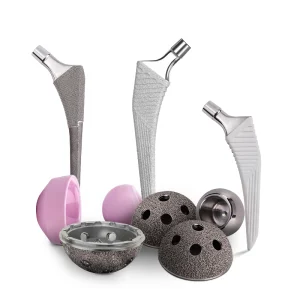
In the rapidly evolving landscape of orthopedic surgery, Modular Femoral Stems have emerged as a cornerstone for successful primary and revision hip arthroplasty. As a premier manufacturer in China, we specialize in delivering high-performance orthopedic solutions that address the complex anatomical challenges faced by surgeons worldwide. The transition from monolithic to modular stem designs represents a significant technological leap, allowing for intraoperative flexibility, precise leg length adjustment, and optimized offset control. Our role as a leading exporter is defined by our commitment to Swiss-grade precision, bio-compatible materials, and a deep understanding of the global musculoskeletal implant market.
The global orthopedic implant market is witnessing a shift towards customized modularity. With an aging population in Europe and North America, the demand for revision hip systems that can handle bone loss has skyrocketed.
3D-printed porous titanium surfaces and bioactive coatings (like Hydroxyapatite) are now industry standards. Modular stems are increasingly designed using AI-driven anatomical modeling for better fit.
Hospitals are moving towards streamlined inventory. Modular systems allow for fewer stock units while providing thousands of possible surgical combinations, reducing overhead costs for medical centers.
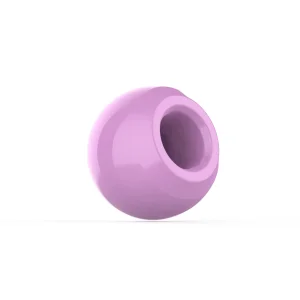
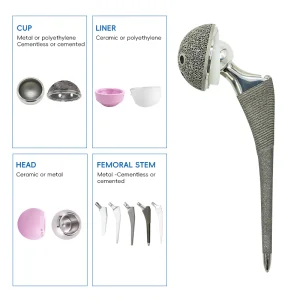
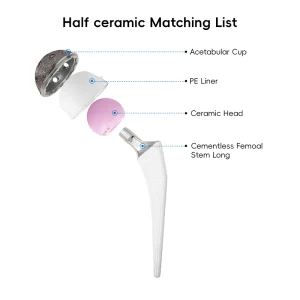
In modern surgical scenarios, the ability to adjust the version and offset independently of the distal fixation is a game-changer. Our Modular Femoral Revision Systems utilize a specialized 12/14 taper design, ensuring maximum mechanical stability and minimizing the risk of fretting corrosion. By decoupling the proximal and distal components, surgeons can address complex deformities that were previously untreatable with monolithic stems. This modularity is particularly crucial in revision cases where bone quality is compromised, and the restoration of joint biomechanics is paramount for patient mobility.
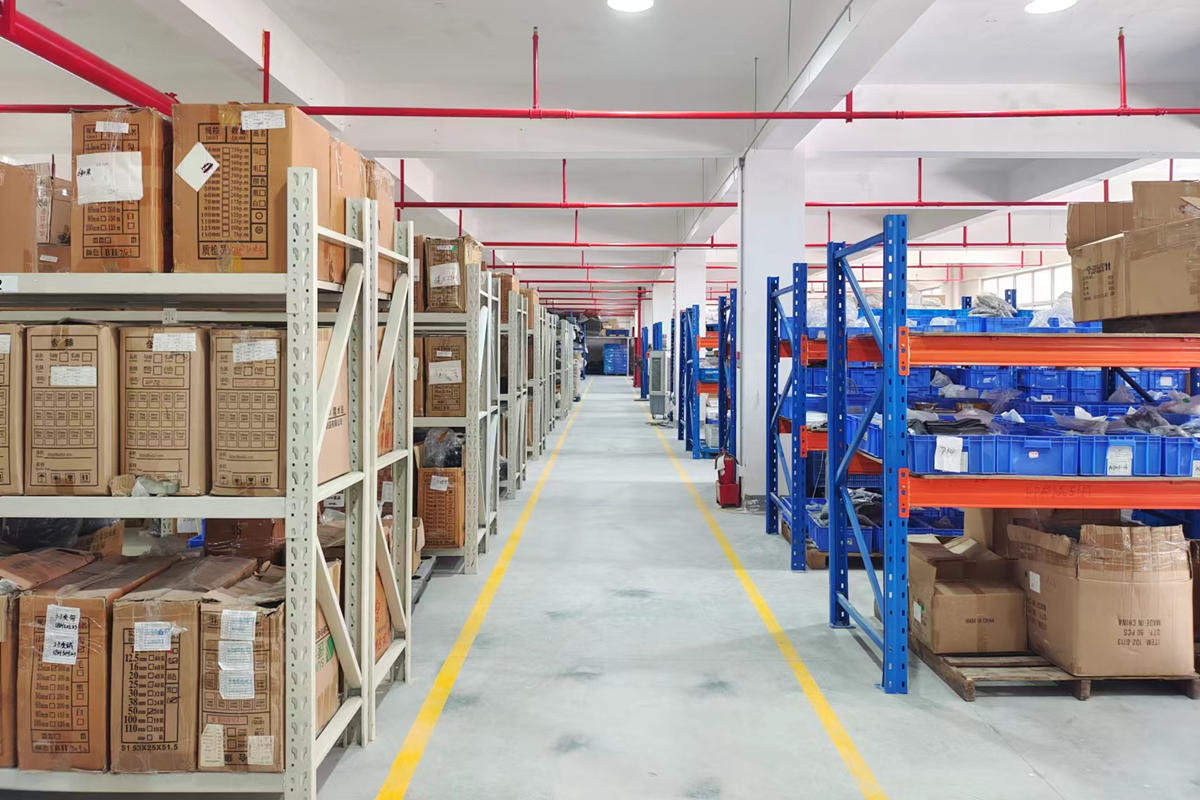
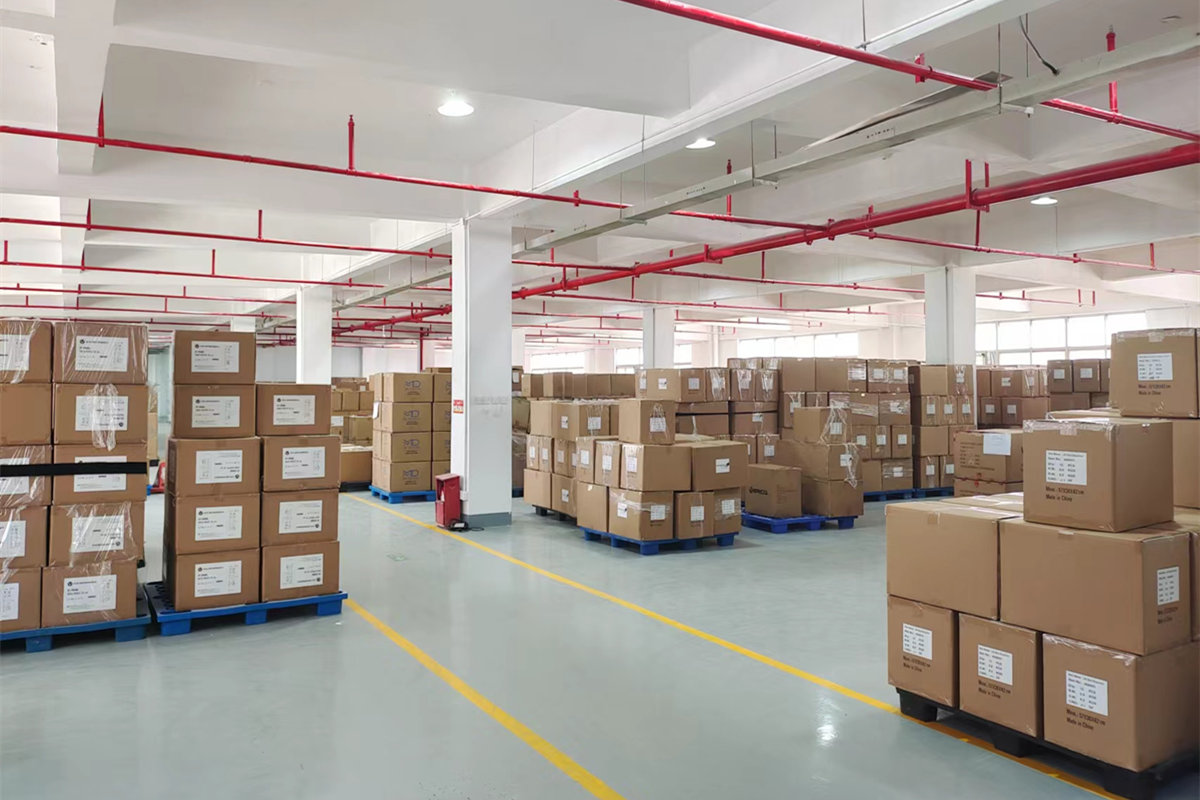
As a leading Chinese manufacturer, we combine cost-efficiency with uncompromising quality. Our facility is not just a factory; it is an innovation center where 500 dedicated professionals, including 8 senior engineers, work together to push the boundaries of orthopedic science. We understand that global procurement managers look for reliability, certifications, and scalability. Our production lines are optimized for both high-volume standardized implants and minor customization projects, ensuring that whether you are a distributor in Latin America or a private hospital group in Southeast Asia, your specific needs are met with precision.
Quality control is the heartbeat of our operation. Every modular femoral stem undergoes rigorous inspection, from raw material traceability to finished product fatigue testing. Our adherence to international standards like the MDR (Medical Device Regulation) ensures that our products are ready for the most regulated markets in the world.
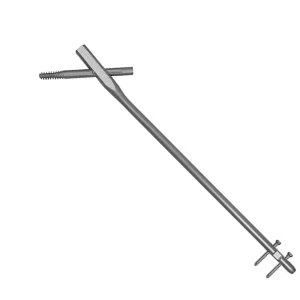
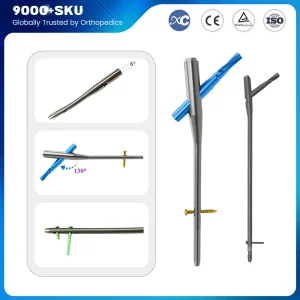
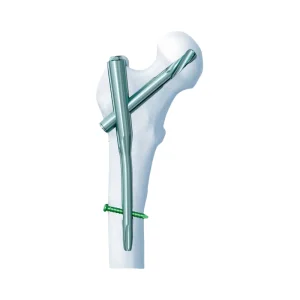
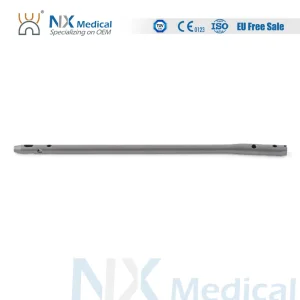
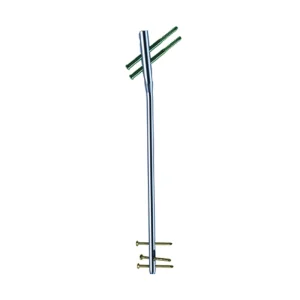
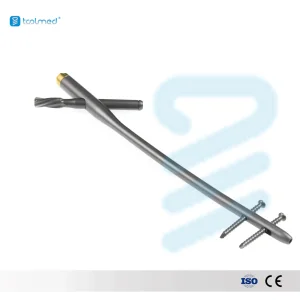
In high-traffic trauma centers, speed and versatility are key. Our Titanium Femoral Interlocking Systems provide the necessary stability for rapid fracture fixation. In localized scenarios where surgeons face diverse patient morphologies—such as varying femoral bow or canal width—our modular components allow for a "custom fit" off the shelf. This reduces surgical time and improves post-operative recovery rates, making it an essential tool for public and private healthcare providers globally.
Furthermore, in developing markets where cost-effectiveness is as vital as quality, our supply chain advantages allow us to offer premium titanium alloys at competitive price points, democratizing access to high-end orthopedic care.
Designed for osteoporotic bone, providing distal fixation that bypasses weak proximal segments.
Easy component exchange during revision surgery without removing well-fixed distal stems.
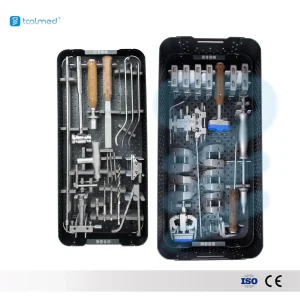
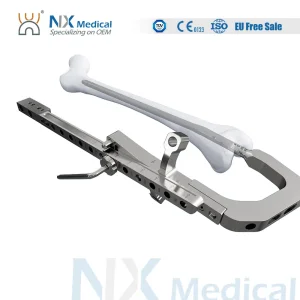
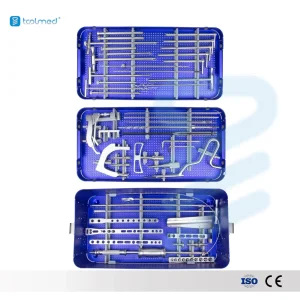
Complete stainless steel instrument sets designed for ergonomic use and precise implantation.
The production of a Modular Femoral Stem begins with the selection of medical-grade Titanium alloy (Ti6Al4V ELI). This material is chosen for its superior biocompatibility, high strength-to-weight ratio, and excellent corrosion resistance. At our factory, we employ advanced CNC machining centers that work to tolerances of less than 10 microns. This precision is critical for the "taper-lock" mechanism of modular stems. If the taper is not perfect, the risk of micro-motion increases, which can lead to metal ion release and implant failure. Our 10-person QC team utilizes coordinate measuring machines (CMM) and ultrasonic cleaning processes to ensure every piece meets the highest clinical standards.
Innovation doesn't stop at machining. Our R&D department, led by 8 senior engineers, focuses on the "Bio-Interface." We are currently implementing plasma-sprayed coating technologies that mimic the structure of natural bone, encouraging rapid osseointegration. This means patients can return to their daily activities faster, with a significantly reduced risk of aseptic loosening.
For global exporters and distributors, we offer a comprehensive support system. This includes agency policy assistance, raw material traceability documentation for regulatory filings, and a one-year free replacement policy for any manufacturing defects. Our goal is to be more than a supplier; we aim to be a long-term strategic partner in the orthopedic field.