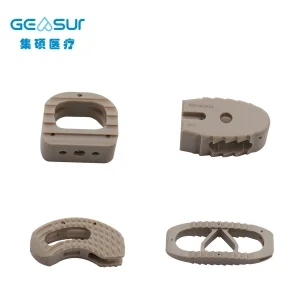
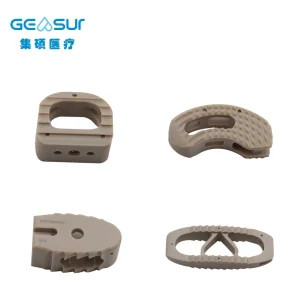
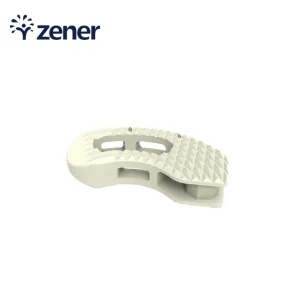
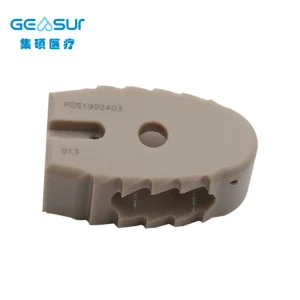
Grai Orthopedic Implants
Grai Orthopedic Implants
Grai Orthopedic Implants
Decoding the Landscape of Interbody Fusion Cage Manufacturing and Global Demand
The Indian medical device industry has undergone a paradigm shift, transitioning from an import-dependent market to a global manufacturing powerhouse. As a central hub for Interbody Fusion Cages (PEEK/Titanium) factories, India combines cost-efficient production with rigorous international quality standards like ISO 13485 and CE certification.
The demand for spinal implants in India is driven by a unique confluence of factors: a growing aging population, an increase in degenerative disc diseases, and India's position as a premier destination for medical tourism. Patients from across the globe visit cities like Delhi, Mumbai, and Bangalore for spinal surgeries, expecting high-quality implants that offer longevity and biocompatibility.
Industrial Trend: Modern Indian factories are increasingly adopting Additive Manufacturing (3D Printing) for Titanium cages, allowing for porous structures that mimic bone trabeculae, significantly enhancing osseointegration compared to traditional smooth-surface implants.
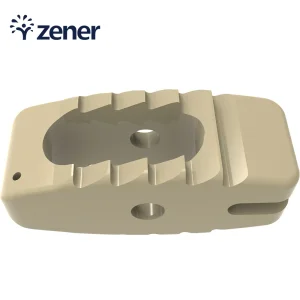
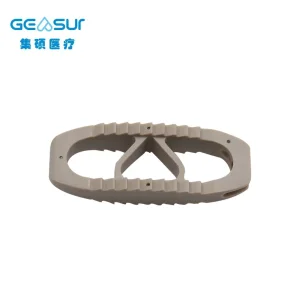
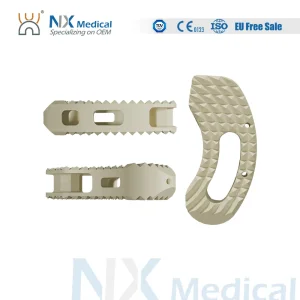
PEEK cages offer clear post-operative imaging, vital for Indian surgeons to monitor fusion progress without metallic artifacts.
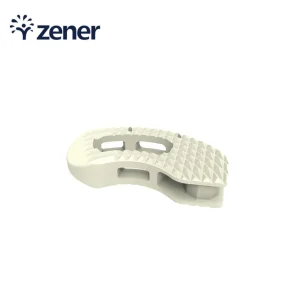
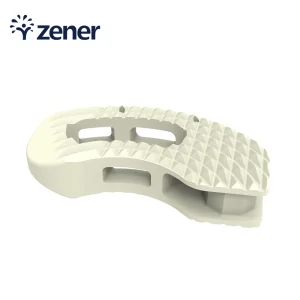
Titanium coating on PEEK provides the "best of both worlds"—the elasticity of PEEK and the bone-bonding of Titanium.
PEEK closely matches human cortical bone, reducing stress shielding—a critical factor for the diverse patient demographics in India.
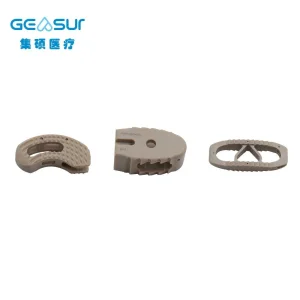
Titanium cages are preferred in high-load spinal segments, offering unmatched structural integrity for complex reconstructions.
In the competitive Indian market, Interbody Fusion Cages (PEEK/Titanium) factories are not just selling products; they are providing comprehensive surgical systems. The integration of Titanium-coated PEEK is a major localized application scenario. It addresses the clinical need for high primary stability and long-term biological fixation, which is essential for India's hardworking middle-aged demographic suffering from early-onset spinal degeneration due to manual labor and lifestyle changes.
Our India-aligned factory operations prioritize raw material traceability. Whether it is medical-grade PEEK (Invibio) or Grade 5 Titanium alloy, every batch is documented. This level of precision ensures that spinal surgeons in major hospital chains like Apollo, Fortis, and Max can trust the implants they use in life-altering surgeries.
Scaling Production to Meet India's and Global Orthopedic Demands
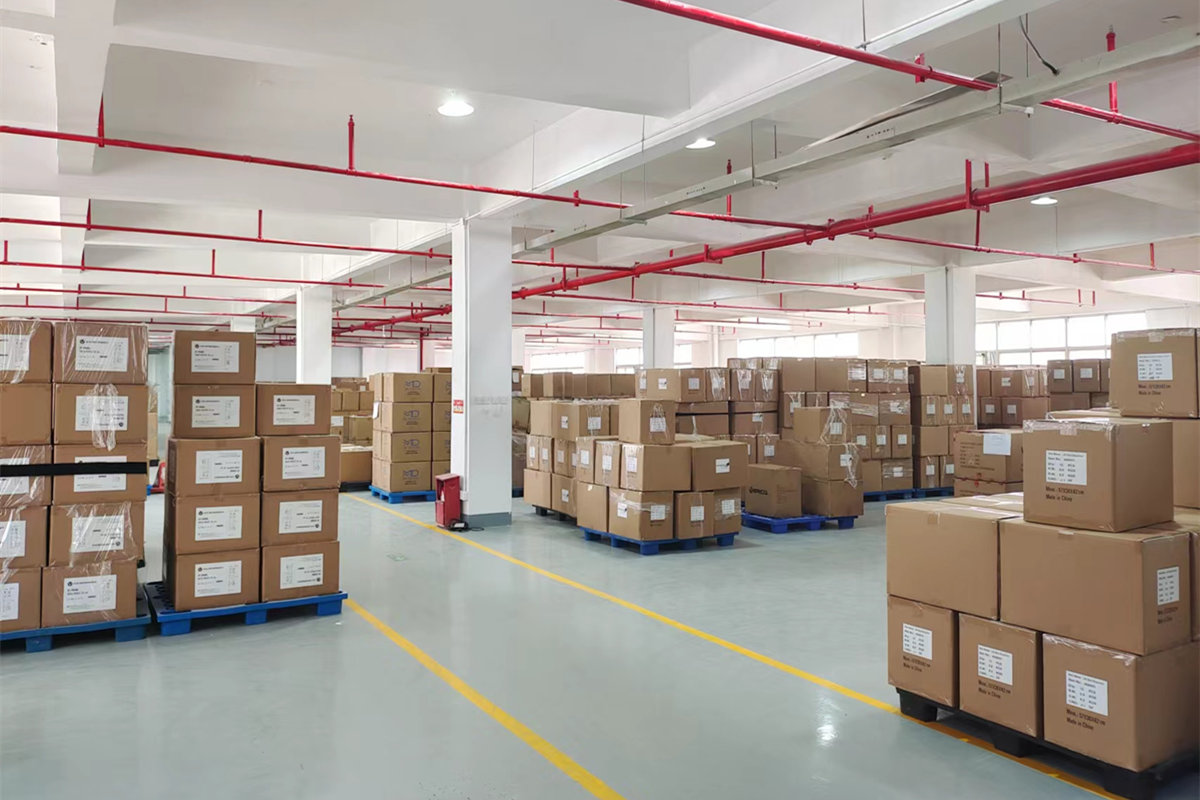
Our factory is certified with ISO13485, and BSCI. Products carry CE, MDR, and FDA certifications, ensuring they meet the stringent safety requirements of both the Indian CDSCO and international bodies.
Supported by 8 senior engineers and 10 QC specialists, our R&D team continuously innovates. We introduce 10 new products monthly, keeping pace with global trends like minimally invasive surgery (MIS) cages.
We provide "Minor Customization" to adapt to specific anatomical requirements found in Indian patients, alongside customizable designs and packaging for distributors across Asia and Africa.
Solving Spinal Challenges in the Indian Healthcare Landscape
In India, the application of Interbody Fusion Cages spans various surgical approaches including PLIF, TLIF, ALIF, and the increasingly popular OLIF. Indian surgeons are pioneers in adapting these technologies for complex spinal deformities and tuberculosis-related spinal collapses, which are more prevalent in this region.
Furthermore, the Titanium Coating Spine System has become a benchmark for success. The plasma-sprayed titanium coating on PEEK substrates allows for immediate friction fit (primary stability) while the PEEK core maintains the necessary flexibility. This technology is particularly favored in multi-level fusion cases where stress distribution is critical to prevent adjacent segment disease.
Our commitment extends beyond the product. We provide raw material traceability identification and strict semi-product/finished product inspections. This ensures that every Indian hospital receiving our products is guaranteed a zero-defect implant.
The roadmap for Interbody Fusion Cages (PEEK/Titanium) factories in India is being rewritten by Digital Health and AI. We are seeing a shift towards Patient-Specific Implants (PSI). Using CT data, Indian factories can now create custom-shaped cages that fit a patient's unique anatomy perfectly, a trend that is rapidly gaining traction in top-tier Indian metro hospitals.
Environmentally conscious manufacturing is also becoming a priority. As part of the "Green India" initiative, many factories are optimizing their CNC and coating processes to reduce waste and energy consumption. Our factory, spanning 15,000 m², is at the forefront of this movement, integrating eco-friendly practices without compromising on the sterile integrity of our orthopedic implants.
Customer satisfaction remains our cornerstone. We offer a free replacement within one year and comprehensive after-sales support with agency policy assistance. This helps Indian distributors build long-term trust with surgical teams, knowing that the factory stands firmly behind every PEEK cage and Titanium screw produced.
As we look toward 2025-2030, the synergy between Indian manufacturing prowess and global technological standards will solidify India's position as a Top-3 global supplier of spinal interbody fusion systems. Our focus on Innovative Solutions, with over 300 different models available, ensures that no matter how complex the spinal pathology, there is a precision-engineered Indian solution ready to restore patient mobility.